By Eric Pedersen, Head of Responsible Investments at Nordea Asset Management
The events of 2025 and early 2026 have challenged many investors’ assumptions. Geopolitical tensions, economic uncertainty and overlapping global disruptions have made forecasting increasingly difficult for both companies and financial markets.
In this environment of uncertainty, investors face a constant flow of headlines and shifting narratives. Yet successful long-term investing requires looking beyond short-term noise and focusing on the structural trends shaping the global economy.
Questions have recently emerged about the pace of the energy transition and the future growth prospects of electric vehicles and sustainable finance. However, a closer look at the underlying fundamentals suggests that a positive inflection point has been reached.
The economics of the energy transition remain compelling
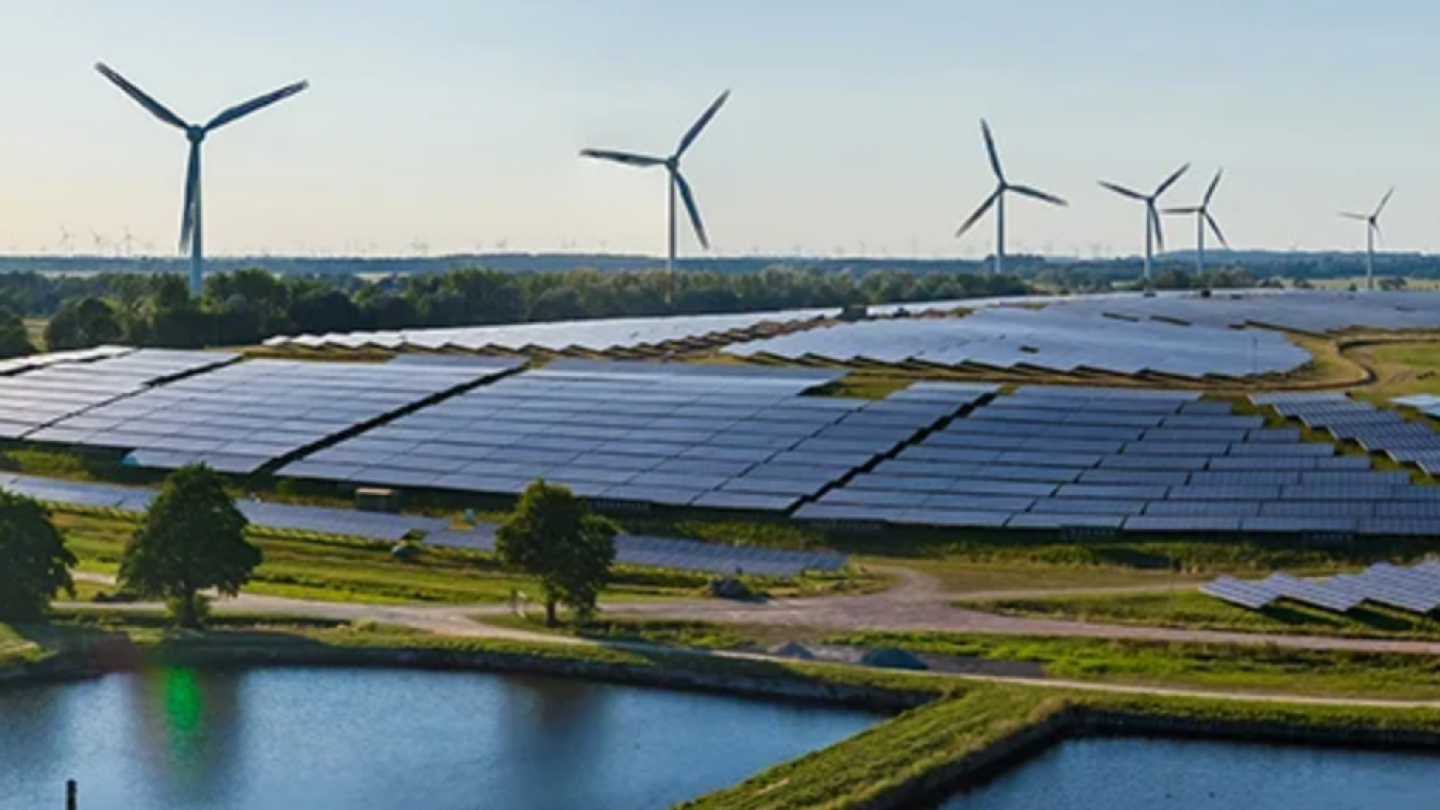
The energy transition continues to be driven by increasingly favourable economics. Since 2021, the costs of renewable energy technologies have declined significantly. Combined with battery energy storage systems (BESS), solar and wind power have become, in many markets, among the cheapest and fastest ways to add new electricity generation capacity while reducing exposure to volatile fossil fuel prices.
Add to this the volatility of fossil fuel prices and indeed availability of energy again showcased by the Persian gulf war and its closure of the Hormuz strait, and energy importers are facing a fundamentally changed incentive structure.
This new reality is increasingly recognised also by businesses. Companies facing rising energy demand are turning to renewable energy and storage solutions as practical and cost-effective ways to secure future power supply.
Global deployment continues to accelerate
Even before the war, and despite concerns about slowing momentum, investment and deployment trends remained strong. In 2025, Texas surpassed California in large-scale solar generation, while the United States added record levels of wind, solar and energy storage capacity.1
At the same time, China continued to expand renewable energy capacity at a pace exceeding that of the rest of the world combined, driven by both energy security and economic considerations.2
These developments illustrate that the energy transition is not dependent on a single market or policy framework. It is increasingly supported by broad economic and industrial drivers and risk management concerns across major economies.
Sustainable finance remains firmly established
In Europe, discussions around regulatory simplification have sometimes been interpreted as a weakening of climate ambitions. In reality, the debate is increasingly focused on improving implementation while preserving the long-term objectives of the transition.
Key frameworks such as the European Emissions Trading System (ETS), the regulation on deforestation and the Sustainable Finance Disclosure Regulation (SFDR), even if amended to varying degrees, look set to remain central pillars of Europe’s climate and sustainable finance agenda.
While retail flows into ESG products have moderated, institutional demand for responsible investment expertise remains robust, reflecting the continued integration of sustainability considerations into long-term investment processes.
Looking beyond short-term narratives
Periods of uncertainty are often amplify short-term narratives and market noise. Yet the underlying drivers of the energy transition and sustainable finance are stronger than ever: sharply improving economics, continued global deployment and institutional support.
For long-term investors, distinguishing between temporary sentiment shifts and structural trends remains essential. In a world of ongoing crises, resilience is built not by reacting to every headline, but by maintaining focus on the long-term forces shaping future value creation.
1 U.S. Energy Information Administration (EIA), U.S. developers report half of new electric generating capacity will come from solar, August 2025.
2 International Energy Agency (IEA), Renewables 2024: Analysis and Forecast to 2030, October 2024.
This press release is intended solely for informational purposes and for use by media professionals. It does not constitute an offer to sell or a solicitation to purchase any securities, nor should it be relied upon by personal investors, financial advisers, or institutional investors for investment decisions. The views expressed represent our current assessment and perspective, which are subject to change without prior notification.
The value of your investment can go up and down, and you could lose some or all of your invested money.
The products mentioned may not be available in all jurisdictions and may be subject to restrictions with regard to certain persons or countries. Before investing, investors should read the prospectus and Key Information Document (KID), available at nordeaassetmanagement.com or from authorized distributors, which contain detailed information about the investment objectives, risks, charges and expenses.
The tax treatment depends on the individual circumstances of each investor and may be subject to change in the future.
Published by Nordea Asset Management, June 2026